How does form grow?
Natural Math models bounded local exploration.
Start here
Fractalish begins with a simple possibility: present structure may preserve a partial record of local exploration.
It can continue, divide, stop, reconnect, or fade. Barriers redirect it. Limited resources shorten it. Earlier routes screen later ones. When the process ends, the surviving form is neither random decoration nor a full recording. It is a filtered residue of what happened.
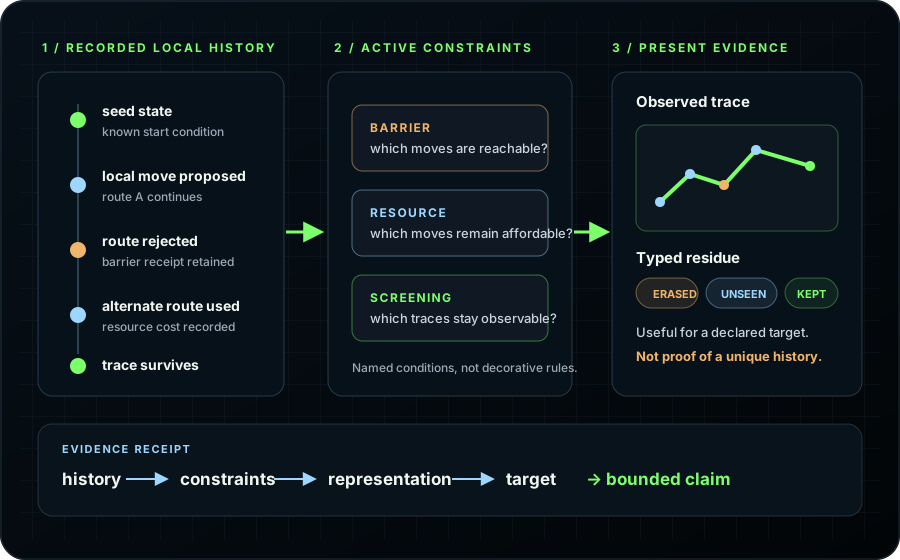
Natural Math models bounded local exploration.
Specificity asks how strongly a representation supports a target claim.
Ageometrics records sufficiency, residue, and recoverability.
Cognitive Basin implements persistent, replayable state.
The important limit
Two forms can look alike and still come from different histories. One history can also look different under different observers or representations. Fractalish therefore treats every inference as target- and protocol-relative.